Air powers the spirit. When breathing becomes constrained, the power is lost.
It is easy to breathe in a short, shallow sort of way, where we only allow the air into the top of our lungs. Often, shallow breathing is accompanied by anxiety, sadness, or fear.
In physical therapy, I spend most of my time working on breathing, stretching the back of my ribs with air, allowing the body to relax in a way I had forgotten. It makes me feel foolish. How could I forget to breathe? On autopilot, my body does a poor job on its own. I’ll find sudden aches develop, a reminder that when I take over breathing with my upper body and neck, I stop using my abdomen, and suddenly I have a migraine from my neck carrying all this extra weight, or my ankles will hurt from my hips being out of alignment with my trunk.
I have learned to manage myself through breathing exercises. When I find I am overwhelmed, I practice box breathing. It is a simple, useful exercise that helps me scrape the surface of getting my emotions under control. All you do is breathe in for a count of four, hold for a count of four, breathe out for a count of four. If it is particularly bad, I might kneel, cross my big toes, and keep my back straight with my hands on my knees while I box-breathe.
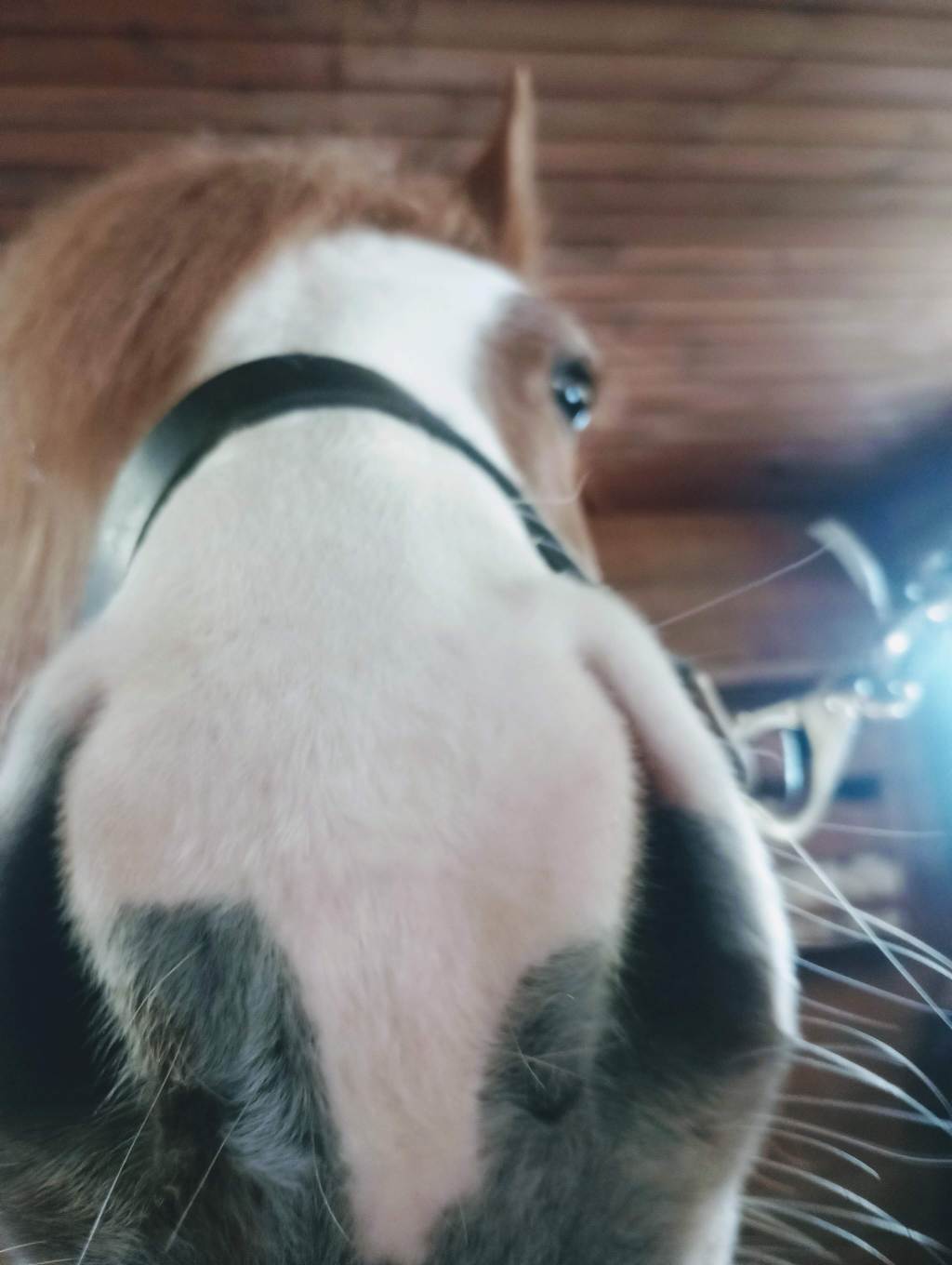
Breathing is doubly important when working with horses. Many of their signals come through the air they expel (or don’t) with their bodies. Horses are also extremely sensitive to us, so if I approach my horse with an elevated heart rate and air only in the top of my lungs, he will respond by shortening his breath and raising his heart rate, preparing for the predator neither of us can see that I unintentionally signaled was nearby.
I have been with my horse in many scenarios. Having him since he was two years old means that I have known him through all his phases, as he has known me. He used to be prone to spook, so I was prone to try and manage him before something scary happened. This forced us down a dark, endless tunnel. I would be looking for things that he might spook at, getting tight and breathing shallow in preparation for the spook, and him finding the thing I thought he might consider scary and spooking.
It was like the snake eating itself.
I was extremely frustrated. I wasn’t sure how I was ever going to get him to behave like a proper fancy dressage horse if he couldn’t walk past a flower pot.
It wasn’t until I observed this with someone else that I changed my approach.
It was a rainy day, the type where the rain pours down in steady sheets and doesn’t let up for hours on end. The worms had come out of the ground; they were along the edges of the path down to the indoor. I like riding in the indoor when it rains. It is like being inside a giant tin can. The noise is tremendous. You can’t hear anyone else if they are bothering to try and talk. I especially like trotting when it is like that. The bouncing rhythm of the trot with the pounding of the rain on the metal roof makes it easier to find the subtleties of the tempo. Many of my best rides have been in the worst weather.
When I entered the arena, there was one other person down there. She was a teenager with an extremely sensitive Thoroughbred. They weren’t a good match. The girl’s temperament wasn’t brave or soft, so the horse was easily wound up and would charge around without any balance or finesse. This would scare her rider into pulling on her to try and get her to slow down, but the tightening would have the opposite effect of slowing her. I had been riding her horse a few times a week by that point to try and educate them both. They were a challenge for me. I couldn’t get the horse to breathe deeply. She didn’t trust a rider.
I watched her out of the corner of my eye while I walked my gelding around the ring. I didn’t like riding with her. Sometimes one anxious horse is all that is needed for all the horses in the arena to become anxious. If I had realized she was down there, I might have spent more time grooming. My gelding liked the extra walking and started to blow his stress out of his nose. Big huffs, where he would stretch his whole neck and his body would shake beneath me. The Thoroughbred felt his breathing and also snorted, not very deeply, but enough that I could hear it over the rain.
You have to be relaxed for a horse to snort and breathe like that. If you are tight and pulling on the reins, they can’t reach out their necks to expel the air. Sometimes one horse triggers the whole arena and everyone sneeze-snorts three or four times in a row. If you aren’t ready for it, they might yank the reins out of your hands, but if you were paying attention, you would know they are about to breathe from the way their ribs suddenly expanded before the snorts.
I could hear the girl yelling at her Thoroughbred to stop grabbing the rein, and it hit me: the snake eating itself. Searching for relaxation and punishing the first step towards it. You don’t get relaxed by forcing it. You get relaxed by letting go.
I still had some letting go to do.
There were many things I saw in the arena that my gelding might find scary, thus spook-worthy on the eleventh time by, but I stopped looking for them.
So he stopped seeing them.
Instead, I looked for relaxation and a supple feeling in his hind legs. I looked for breathing through his ribs, so that when I put my leg on him, he moved over energetically and easily. A horse who breathes in short, shallow gasps is not a fun ride. The whole time you will be fighting for the tempo to stay the same, for basic obedience, and for them to move off your aids with relative ease.
Our entire relationship changed the day I changed my focus to using his power instead of shrinking from it. Once I had his breathing in order, he had the spirit to do nearly anything I asked.
The next step is to start using my own power.


Leave a Reply